Diabetic foot ulcer care often involves more than simply covering the wound. When drainage is present, the care team may also need to consider how well a dressing manages wound exudate, how the surrounding skin is holding up between dressing changes, and how the dressing interacts with the skin during removal.
For people carrying out dressing care at home as part of a clinician-directed care plan, understanding these considerations can help clarify the role of the dressing. A dressing may need to absorb and retain excess wound fluid while also supporting observation of the wound area and helping minimize unnecessary pulling on the surrounding skin during removal.
Dimora MegaSorb™ Silicone Foam Dressing is designed to support these needs through the MegaSorb™ absorption and retention system, a medical-grade silicone contact layer, and a waterproof, breathable outer film.
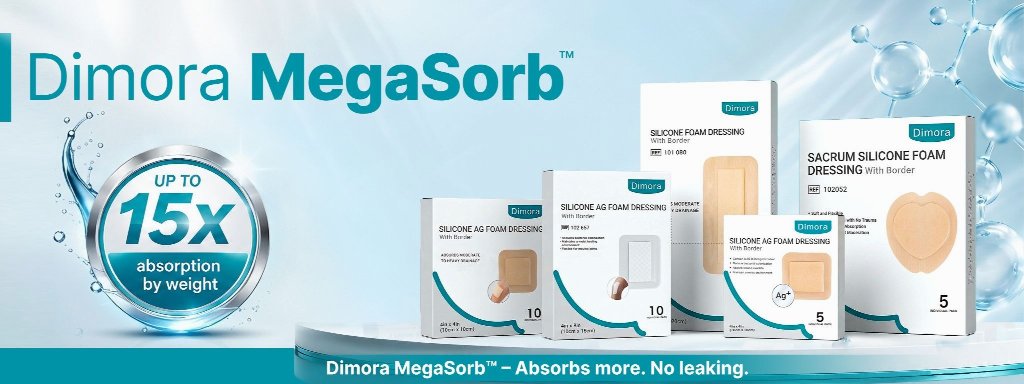
Why Exudate Management Matters in Diabetic Foot Ulcer Care
Wound exudate is part of the wound-healing process, but moderate to high levels of drainage can create additional challenges during care.
If excess fluid is not adequately managed, it may spread toward the edge of the dressing or remain in prolonged contact with the surrounding skin. This may require closer attention to leakage, dressing condition, and changes in the skin around the wound.
Dressing performance should therefore be considered in terms of both absorption and retention. These functions support exudate management but do not replace broader diabetic foot assessment and care.
Absorbing Fluid Is Only the First Step
Absorption describes how much wound fluid a dressing can take in. Retention describes how well the absorbed fluid remains contained within the dressing.
Dimora MegaSorb™ uses the MegaSorb™ Dual-Action Absorption System, which is designed to combine these two functions.
According to Dimora, MegaSorb™ Silicone Foam Dressing can absorb up to 15 times its own weight in wound exudate. Its fluid-management structure is designed to help retain absorbed fluid while reducing the risk of leakage and fluid backflow.
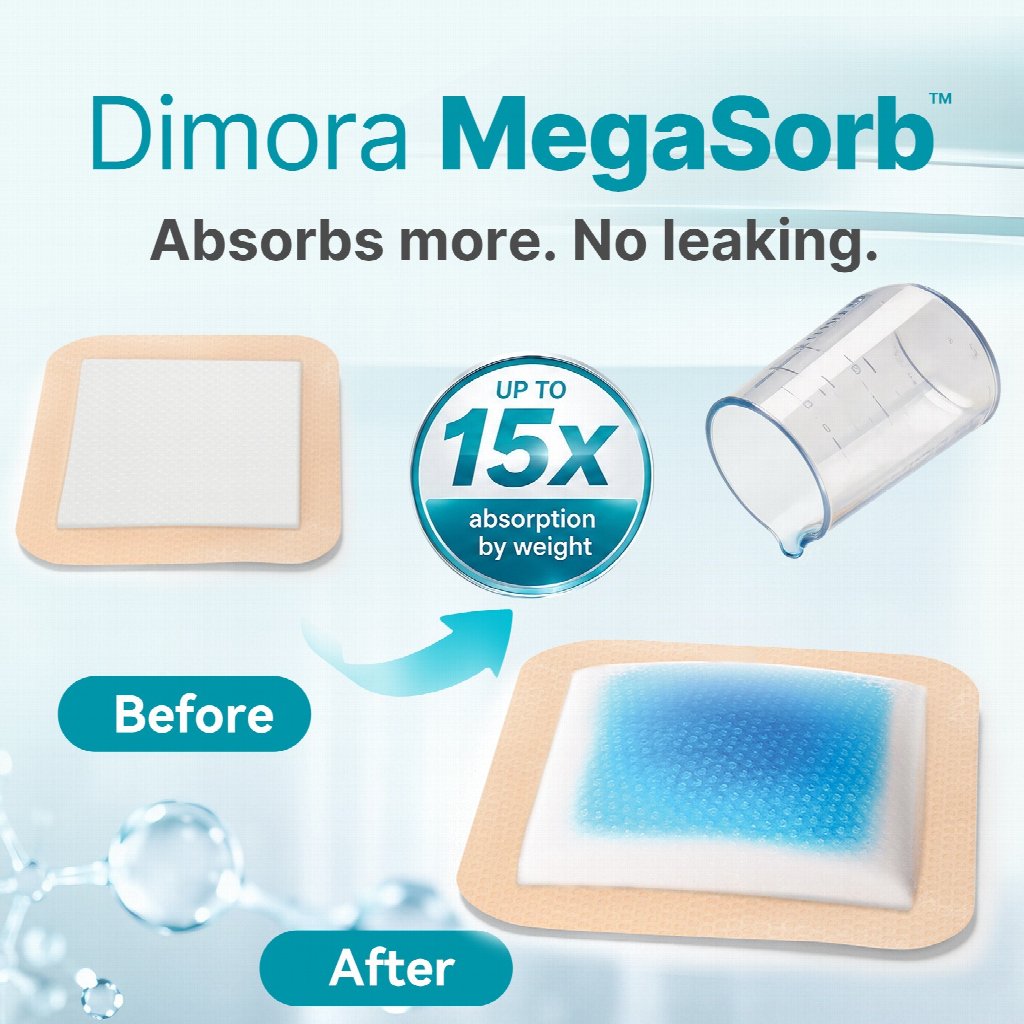
For diabetic foot ulcer care, this may help contain excess drainage within the dressing and reduce the risk of fluid spreading toward the dressing edge.
Paying Attention to the Skin Around the Wound
The wound itself is not the only area that requires observation during dressing changes.
Surrounding skin that remains exposed to excess wound exudate for extended periods may become overly moist. Dressing assessment should therefore consider not only the amount of drainage but also how well the dressing is retaining fluid between changes.
A dressing that combines absorption with fluid retention may help limit prolonged contact between excess exudate and the periwound skin.
This function does not replace regular wound observation, vascular and neurological assessment, infection evaluation, pressure offloading, or other elements of professional diabetic foot care.
Gentle Contact Matters During Repeated Dressing Changes
Diabetic foot ulcer care may involve repeated dressing changes, making the dressing-to-skin interface another relevant consideration.
Dimora MegaSorb™silicone foam dressing uses a medical-grade silicone contact layer designed to support gentler removal by helping reduce pulling on the surrounding skin.
For skin that is sensitive or repeatedly exposed to dressing changes, this feature may help make the removal process more manageable. It should still be considered alongside the overall condition of the wound and surrounding skin.
External Protection Between Dressing Changes
Dimora MegaSorb™ silicone foam dressing also uses a waterproof, breathable PU film outer layer designed to help protect against external water and contaminants while allowing moisture vapor to pass through.
This outer layer complements the absorbent structure and silicone contact layer, providing additional protection during wear.
Which MegaSorb™ Formats May Be Considered?
The MegaSorb™ fluid absorption and retention platform is used across Dimora’s Square, Sacral, and Silver Silicone Foam Dressings.
The Square Silicone Foam Dressing provides one format that may be considered for certain diabetic foot-related wound-care situations. Its conventional shape is designed for a variety of wound locations in which exudate management, fluid retention, and gentle silicone contact are relevant considerations.
The range also includes a Sacral Silicone Foam Dressing, designed for the contours of the sacral area, and a Silver Silicone Foam Dressing for specific situations in which a silver-containing dressing is considered appropriate.
Selection of any dressing, particularly should be based on the wound location, exudate level, surrounding skin condition, product instructions, and guidance from an appropriate healthcare professional.
Professional Assessment Still Matters
Dressing choice is only one part of diabetic foot ulcer care.
Changes in drainage, appearance, odor, surrounding skin, sensation, circulation, or other aspects of the wound should be considered as part of a broader professional assessment. Dressing selection cannot replace evaluation of infection, blood flow, pressure, offloading requirements, or other factors that may affect diabetic foot wounds.
MegaSorb™ is designed to support exudate management and dressing care, not to diagnose, treat, or replace professional assessment of a diabetic foot wound.
Takeaway
For diabetic foot ulcer care, a dressing should be evaluated by more than its absorption capacity alone.
Fluid retention, periwound-skin condition, removal experience, wound location, and professional assessment can all influence dressing selection.
Dimora MegaSorb™ Silicone Foam Dressing is designed to combine fluid absorption and retention with a medical-grade silicone contact layer and a waterproof, breathable PU film. Within the range, the Square format provides one option for certain diabetic foot-related wound-care situations when its use is consistent with the product instructions and the individual care plan.
Used as part of professionally guided wound care, these features may help make dressing routines more manageable—supporting Dimora’s broader goal to Make Home Care Easy.

Hi, I’m the Founder and Developer of Paramedics World, a blog truly devoted to Paramedics. I am a Medical Lab Tech, a Web Developer and Bibliophiliac. My greatest hobby is to teach and motivate other peoples to do whatever they wanna do in life.